
We spotted this review on The Journal of Music and thought it was worth sharing.
A new anthology, Nothing Compares to You: What Sinéad O’Connor Means to Us, edited by Sonya Huber and Martha Bayne, collects 25 essays by women and non-binary writers reflecting on Sinéad O’Connor’s influence—through music, activism, and identity.
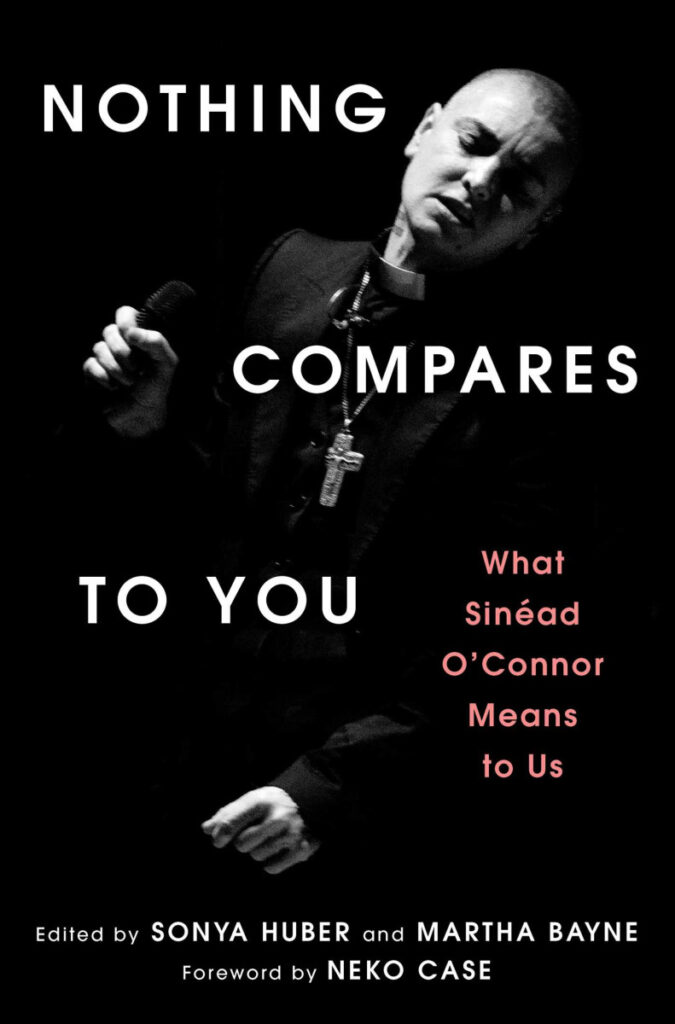
An Intimate Celebration by a Diverse Group of Writers
The contributors—mostly U.S.-based—span generations and backgrounds. Notably, Sinéad Gleeson is the only writer from Ireland featured. Each essay is named after an O’Connor song and loosely follows her discography. The first essay references her track “Heroine”, while the final piece is titled after “Horse on the Highway”, a 2020 demo.
Themes that Resonate Deeply
Recurring motifs include surviving abuse, motherhood, grief, feminist resistance, and religion. These threads mirror O’Connor’s own life and lyrics, forming a powerful emotional current throughout the collection.
Beyond the Headlines: Sinéad O’Connor in Her Later Years
Several authors shift focus from her youthful fame to her later life—offering a more nuanced portrait of an evolving artist. Sinéad Gleeson, for example, writes about a backstage encounter during O’Connor’s final Dublin concert in 2019, portraying her smiling, content, and embracing her role as a mother and Muslim convert.
Additionally, Sharbari Zohra Ahmed explores how O’Connor’s adoption of Islam as Shuhada’ Sadaqat resonated with her as a Muslim woman, expanding the artist’s cultural reach beyond Western audiences.
A Collection That Honors Emotional Authenticity—with Limits
The anthology’s strength lies in how it foregrounds connections between the authors and O’Connor’s life and music. Through deeply personal stories, the book shows how O’Connor served as a “beacon” for those grappling with silence, stigma, and loss.
At times, however, her music recedes from view as essays drift toward personal narratives. The focus on her early work—like The Lion and the Cobra, I Do Not Want What I Haven’t Got, and the Am I Not Your Girl? era—leaves out much of her later output. This emphasis mirrors media narratives that often fixated on her rebellion in the early 1990s rather than her full artistic journey.
Who Should Read It—and Why?
This collection offers both fans and newcomers a heartfelt window into O’Connor’s legacy. It underscores her role as a radical voice, empathic figure, and cultural catalyst. Yet, readers searching for a detailed musicological or career-spanning analysis may find it uneven.